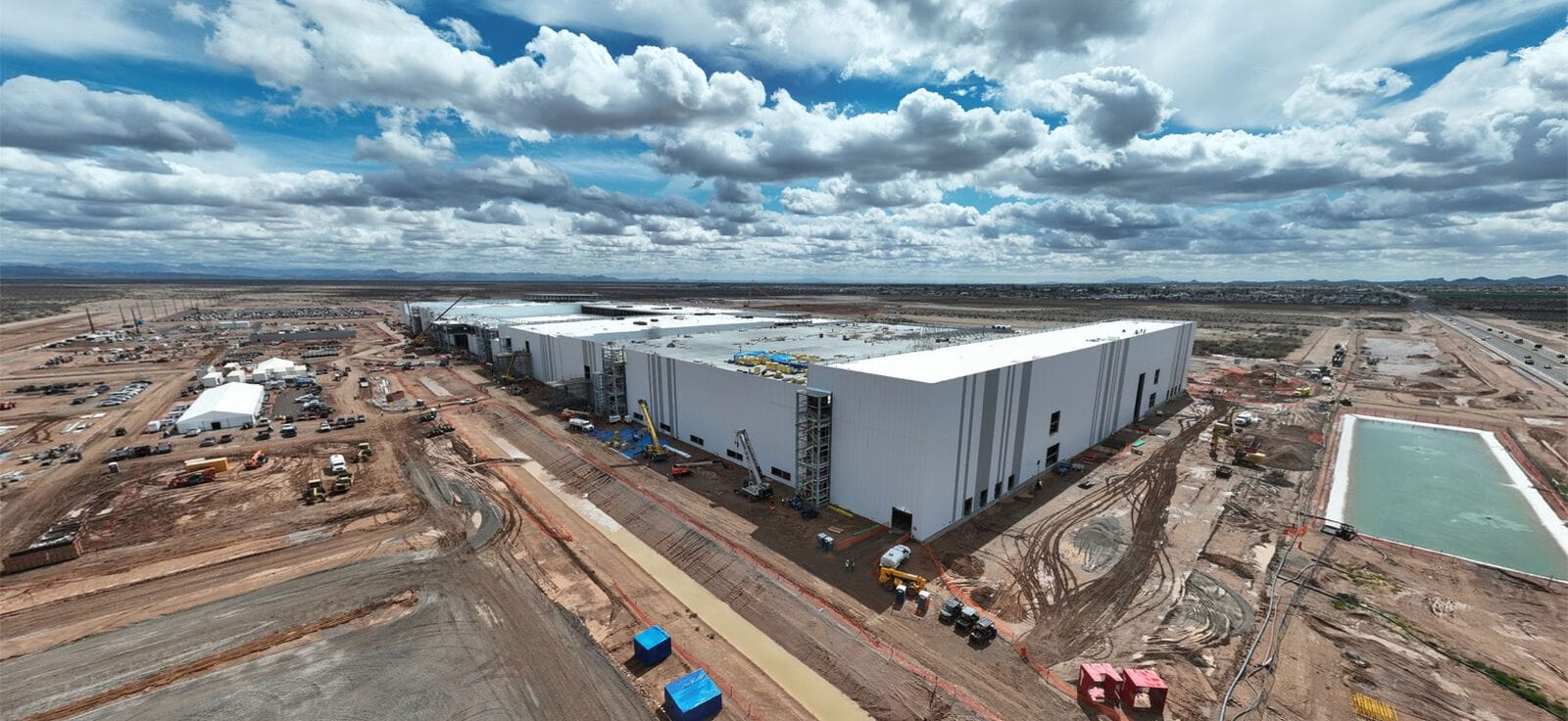
Economic developers have an outsized impact on how their communities look today and the opportunities available to future residents. Even though practitioners influence what gets built across the state, economic development remains under the radar as a career path.
“There isn’t really a straightforward pipeline into the profession,” explains Katie Hurst, CEO of AAED. “If you go to college for marketing, you’ll likely get a marketing job after graduation. But there isn’t an economic development degree offered by the major universities or community college systems in Arizona.”
One of the challenges with raising awareness is that it’s difficult to quickly explain what practitioners do since economic development encompasses a broad range of activities.
Ryan Touhill, who joined the City of Phoenix as its community and economic development director in late 2025, says that the primary function of practitioners has evolved throughout his career.
“We used to focus just on business attraction, but now we’re involved in all facets of community building,” he continues. “That means we’re looking at what industries need in the future, including getting the infrastructure in place to support that growth — not just roads, but housing and education too.”
Understanding the nuances of federal policy has become more important as well. Touhill explains that when something like the Opportunity Zone program is implemented, economic developers are expected to “suddenly become experts” on the topic.
“You might need to learn about emission reduction grants or wastewater,” he continues. “On any given day, you’re involved with things you probably weren’t working on the day before. That’s the fun part of the job — you’re always figuring out how to piece all these policies and tools together to make your community more successful.”
Land of opportunity
Arizona is a truly unique place that contains a range of diverse cultures, climates and lifestyles within its borders. That sense of proud-yet-welcoming independence is reflected in communities across the state, each with its own particular needs and assets.
For example, Jamie Kerr, economic development administrator for the Town of Prescott Valley, explains that his main goal is to attract new jobs, especially second- and third-tier suppliers in the semiconductor, aerospace and defense industries.
Practitioners in rural areas are often saddled with more responsibilities and fewer resources than their urban counterparts. Kerr considers himself lucky to have a colleague who oversees tourism and retail development for Prescott Valley, but he’s also trying to take advantage of federal programs to meet a pressing need for the town.
“We’re short on healthcare capacity, so we’re trying to expand the hospital at our regional health center,” he says. “At the same time, we want to build affordable housing around the expansion for the people working at the hospital using an Opportunity Zone.”
Not everyone, however, lives within a city or town that has a dedicated economic development department. Joel Millman, the economic and workforce development director for Pinal County, explains that his team assists unincorporated areas with their attraction efforts.
“At the same time, we coordinate with the municipalities that make up Pinal County,” he continues. “Regardless of where a site selector might be looking, I always encourage them to let us know their workforce needs are as quickly as possible. Putting together a customized training program can take just as long as getting a facility constructed.”
Laying the groundwork
Of all the duties economic development professionals are responsible for, business attraction garners the most attention from industry outsiders. Bringing in new jobs may earn headlines, but keeping them is just as important to sustained growth.
Jennifer Lindley, who recently became the Town of Gilbert’s economic development director after nearly 13 years with Queen Creek, says that already established companies can be great advocates for the community.
“They’re our best marketers and can even be the deciding factor in why a business chooses to land here,” she continues.
Establishing productive relationships with companies, plugging them into existing networks and proactively addressing their needs are effective tools for retention, but sometimes a more personalized approach is needed.
Lindley notes that downtown business owners don’t always have a deep knowledge of the development process, so Queen Creek established a program to provide additional guidance that a more experienced operator may not need.
Robust business retention services can lead to future expansions and attract new companies to the market, but only if there’s a place for them to locate.
Having shovel-ready sites available — which Kerr defines as a flat piece of land outfitted with water, power, sewer and gas utilities — is paramount since site selectors make decisions quickly.
“Time is money, so it’s critical to have sites as close to shovel ready as possible,” Kerr continues.
Since speed to market can make or break a deal, Touhill adds that ensuring sites have the proper zoning can prevent last-minute hang-ups.
“Government processes take time, so the more you can cut that down, the bigger difference it makes,” he says. “You could have the best incentive program in the world, but it won’t do you any good if you can’t get them through the process quickly.”
Growing pains
Thanks to a multiyear effort by the state’s leaders, Arizona now enjoys a more dynamic and resilient economy than ever before. As growth accelerates, economic developers face new challenges and a larger workload.
To better understand which issues are most pressing, AAED conducts an annual survey asking members to identify what has the greatest impact on the profession. According to the 2026 results, practitioners see electrical capacity as the No. 1 concern.
Touhill says he’s seen a trend of site selectors requesting large quantities of power that utilities are unable to fulfill quickly. Fears around scarcity have prompted users to ask for enough electricity to meet their operational needs at full buildout rather than what’s required to start.
Communities that don’t probe companies for what they actually intend to use in the early phases of development may find themselves locked out of future opportunities due to overcommitting resources.
“A lot of times, we see companies admit they don’t need all that power right away after having that conversation,” Touhill adds.
Another obstacle revealed by AAED’s survey is a rise in political interference. According to the report, 66% of respondents indicated this was a problem hindering their work — an all-time high for the survey.
Attracting new businesses and successfully retaining them is a collaborative effort, which is why Touhill stresses the importance of fostering trust and encouraging honest communication.
“An economic developer shouldn’t be afraid to tell the mayor and council about a project,” he continues. “Elected officials should get familiar with the issues and assets in their community. Yes, it takes time, but that’s how you build relationships.”
Lindley adds that strong connections between a municipality’s economic development department and elected officials only strengthen attraction efforts.
“They’re our best ambassadors,” she concludes. “Companies aren’t just assessing things like the workforce pipeline or housing availability — they’re evaluating the leadership of the place they’re looking to invest.”